How to Track Water Parameters Like a Pro: Complete Guide for Reef Aquariums | ReefBay Guide
Learn everything about How to Track Water Parameters Like a Pro: Complete Guide for Reef Aquariums with ReefBay. Complete guide with tips, best practices, and expert advice for reef aquarium hobbyists.
Your reef tank's water chemistry is the invisible foundation of a thriving ecosystem. Miss a parameter shift, and you might wake up to bleached corals or stressed fish. But track them consistently? You'll catch problems weeks before they become disasters—and your reef will flourish.
Why Water Parameters Matter (More Than You Think)
Here's the truth: reef tanks are living chemistry labs. Every coral, fish, and piece of live rock is constantly altering your water. Corals pull calcium and alkalinity to build their skeletons. Fish produce waste that becomes nitrate. Your lighting affects pH through photosynthesis.
Without tracking, you're flying blind. A slow alkalinity drop might seem fine—until your corals suddenly stop growing or start browning. A nitrate creep might go unnoticed—until you have an algae outbreak you can't control.
💡 Real Story:
A reefer tracked alkalinity weekly and noticed it dropping 0.2 dKH per day. By catching it early, they adjusted their dosing pump before any corals were affected. Without tracking? They'd have lost colonies before realizing what happened.
The Essential Water Parameters You Must Track
🌡️ Temperature (74-78°F / 23-26°C)
Why it matters: Temperature affects everything—oxygen levels, coral metabolism, bacterial activity. Even 2-3 degrees can stress your tank.
How to track: Use a reliable thermometer (digital is best). Check daily, especially in summer/winter when ambient temps change.
Red flags: Swings greater than 2°F per day, or anything outside 74-78°F range.
🧪 Salinity (1.025-1.026 specific gravity / 35 ppt)
Why it matters: Salinity affects osmoregulation (how fish/corals maintain cellular balance). Too low or high? Everything struggles.
How to track: Refractometer (most accurate) or hydrometer. Test weekly, always at the same temperature.
Red flags: Anything below 1.024 or above 1.027. Swings indicate evaporation issues or bad top-off practices.
📊 Alkalinity (8-10 dKH)
Why it matters: Alkalinity is pH stability + coral skeleton building. It's the #1 parameter serious reefers obsess over—for good reason.
How to track: Test kits (Salifert, Red Sea) or automated testers (Trident, KH Guardian). Test 2-3x per week minimum.
Red flags: Swings greater than 0.5 dKH per day stress corals. Anything below 7 dKH or above 11 dKH is risky.
⚠️ Pro Tip:
Stability beats perfection. A tank at 7.5 dKH consistently is better than one bouncing between 8-10 dKH. Corals adapt to stable conditions—they can't adapt to constant change.
🦴 Calcium (400-450 ppm)
Why it matters: Calcium + alkalinity = coral skeleton growth. Without enough calcium, your corals literally can't grow.
How to track: Test kits or automated systems. Test 1-2x per week.
Red flags: Below 380 ppm (corals stop growing), above 480 ppm (precipitation risk).
🔬 Magnesium (1,250-1,350 ppm)
Why it matters: Magnesium prevents calcium and alkalinity from bonding and precipitating out of solution. Low mag = your calcium/alk dosing won't work.
How to track: Test monthly (it's stable). More often if you're chasing calcium/alk issues.
Red flags: Below 1,200 ppm (calcium/alk won't stay stable).
🧫 Nitrate (1-10 ppm ideal, <20 ppm acceptable)
Why it matters: Some nitrate is good (coral nutrition). Too much = algae blooms and coral color loss.
How to track: Test kits weekly. Ultra-low nutrient systems (ULNS) target 1-3 ppm.
Red flags: Above 20 ppm (algae risk), or absolute zero (coral starvation in mature tanks).
⚗️ Phosphate (0.03-0.1 ppm)
Why it matters: Like nitrate—some is good, too much fuels algae and dulls coral colors.
How to track: Use a sensitive test kit (Hanna Checker ULR is gold standard). Test weekly.
Red flags: Above 0.15 ppm (algae/color issues), or undetectable in mature tanks (corals need some phosphate).
🌊 pH (7.8-8.4)
Why it matters: pH affects coral calcification and overall tank chemistry. Low pH = stressed corals and slower growth.
How to track: Digital pH probe or quality test kit. Check weekly. pH naturally fluctuates day/night.
Red flags: Consistently below 7.8 (calcium/alk won't work properly), or wild swings (more than 0.3 units).
How to Actually Track Parameters (Without Going Insane)
1. Build a Testing Schedule
Don't test everything every day—you'll burn out. Here's a sustainable schedule:
- Daily: Temperature, salinity (quick glance)
- 3x per week: Alkalinity (the most important one)
- Weekly: Calcium, nitrate, phosphate
- Monthly: Magnesium, pH
2. Log Everything in One Place
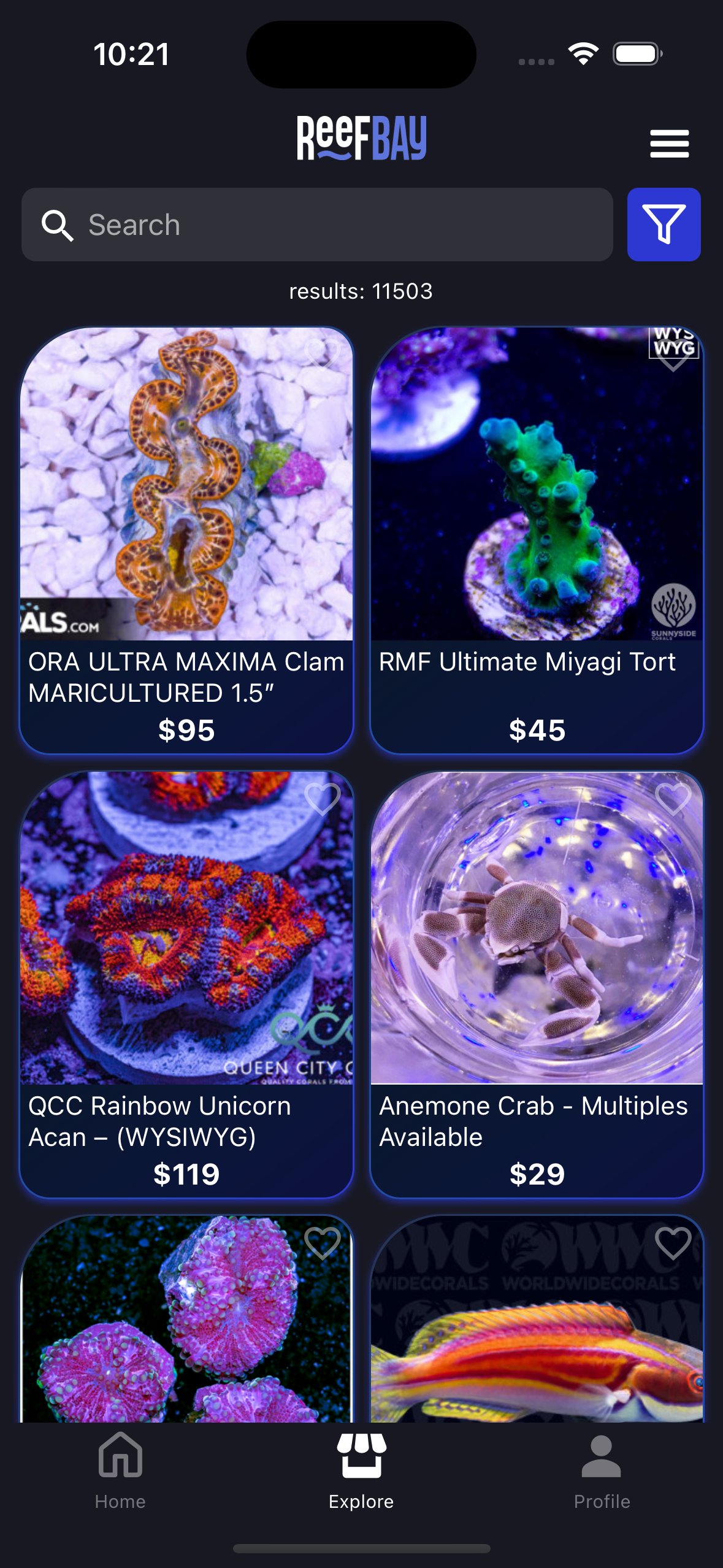
Paper logs get lost. Spreadsheets are clunky. The best reefers use dedicated reef tracking apps like ReefBay because:
- ✅ Log parameters in 30 seconds on your phone
- ✅ See trends over time with automatic charts
- ✅ Get reminders for testing schedules
- ✅ Track multiple tanks in one place
- ✅ Share data with other reefers or when troubleshooting
✨ Success Story:
"I used to forget to test alkalinity for weeks. After switching to ReefBay's reminders and quick logging, my tank has never been more stable. Seeing the charts made me realize my alkalinity was slowly dropping—I adjusted my doser before any damage happened." — @reefnerd, ReefBay community
3. Look for Trends, Not Single Numbers
One bad reading isn't the end of the world. What matters is direction:
- 📉 Downward trend? Your consumption is outpacing your dosing/water changes
- 📈 Upward trend? You're dosing too much or overfeeding
- 📊 Flat and stable? Perfect—keep doing what you're doing
4. Calibrate Your Test Kits
Test kits expire. Solutions degrade. Always:
- Check expiration dates
- Store kits properly (cool, dry, out of sunlight)
- Test against known standards occasionally
- Replace annually even if not expired
Common Mistakes (And How to Avoid Them)
❌ Testing Too Infrequently
Testing once a month won't catch problems in time. Test alkalinity at least 3x per week—it changes fastest and matters most.
❌ Chasing Perfect Numbers
Don't panic over small swings. Focus on stability. A tank at 8.5 dKH consistently beats one bouncing between 8-10 dKH trying to hit "perfect" 9 dKH.
❌ Testing at Random Times
Parameters fluctuate throughout the day (especially pH). Test at the same time each day for accurate comparisons.
❌ Not Logging Results
"I'll remember" = you won't. Log every test. Three months from now, those logs will reveal patterns you'd never notice otherwise.
Advanced Tips for Serious Reefers
📱 Use Automation Where It Matters
Alkalinity swings kill corals. If your budget allows, automated testing (Trident, KH Guardian) + dosing pumps give you lab-grade stability.
🔔 Set Up Smart Reminders
Life gets busy. Apps like ReefBay send push notifications: "Time to test alkalinity" or "Water change due tomorrow." You'll never forget again.
📊 Compare Tanks
Running multiple tanks? Track them separately and compare. You'll learn what works (and what doesn't) by seeing patterns across systems.
Track Your Reef Parameters Like a Pro
Download ReefBay free on iOS and Android
Log tests in seconds • Visual trends • Smart reminders • Multi-tank support
Your Next Steps
Don't let parameter tracking overwhelm you. Start simple:
- Week 1: Just track temperature and alkalinity
- Week 2: Add calcium and salinity
- Week 3: Add nitrate and phosphate
- Week 4: You've got a full routine—now keep it consistent
The difference between a struggling tank and a thriving reef isn't luck—it's data. Start tracking today, and watch your corals thank you with growth and color you didn't know was possible.